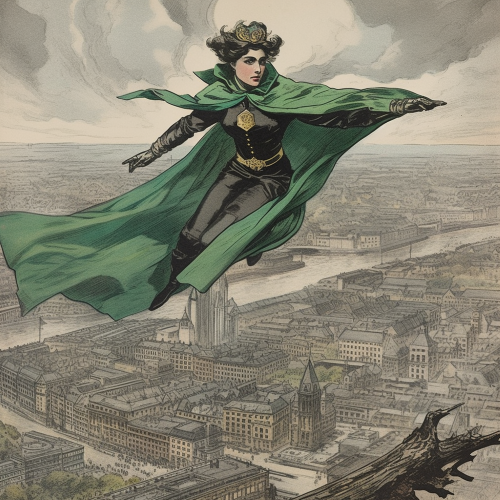
¶ Emmeline Pankhurst: The British Suffragette Icon
¶ Introduction
Emmeline Pankhurst (née Goulden; 15 July 1858 – 14 June 1928) was a prominent British political activist and leader of the suffragette movement, known for her unwavering dedication to securing women's voting rights. Her tireless efforts and passionate advocacy played a pivotal role in advancing the cause of gender equality and reshaping the political landscape of the United Kingdom.
¶ Early Life and Activism
Born in Manchester, England, Emmeline Goulden was raised in a politically engaged and socially conscious family. Her parents, Sophia and Robert Goulden, were supporters of women's suffrage and social reform, which undoubtedly influenced young Emmeline's later pursuits. She attended local schools and was exposed to a progressive atmosphere that nurtured her ideas about gender equality from a young age.
¶ Formation of the Suffragette Movement
In 1889, Emmeline married Richard Pankhurst, a lawyer and ardent supporter of women's suffrage. The couple's shared passion for women's rights led them to establish the Women's Franchise League in 1889, focusing on advocating for women's suffrage through peaceful means. However, growing frustrated with the lack of significant progress, Pankhurst adopted more radical tactics to draw attention to the cause.
¶ The Suffragette Struggle
In 1903, Emmeline Pankhurst founded the Women's Social and Political Union (WSPU), a militant organization that aimed to secure voting rights for women through direct action and civil disobedience. The WSPU's members, known as suffragettes, engaged in various forms of protest, including hunger strikes, public demonstrations, and even property destruction. Pankhurst's charismatic leadership and fearless approach drew widespread attention to the suffrage movement.
¶ Imprisonment and Resilience
Pankhurst faced repeated arrests and imprisonments for her involvement in suffragette activities. Her commitment to the cause remained steadfast, even when faced with harsh treatment and force-feeding during hunger strikes. Her unwavering determination inspired countless women to join the suffragette movement and stand up against societal norms that denied them political rights.
¶ World War I
With the outbreak of World War I in 1914, the suffragette movement temporarily shifted its focus to supporting the war effort. Pankhurst and the WSPU suspended their militant actions and rallied women to contribute to the war industries. The British government's recognition of women's contributions during the war eventually led to the Representation of the People Act in 1918, granting voting rights to women over the age of 30.
¶ Legacy
Emmeline Pankhurst's legacy extends far beyond her lifetime. Her relentless activism and determination significantly contributed to women's enfranchisement in the UK and served as an inspiration for future generations of feminists and human rights advocates. Her efforts paved the way for greater gender equality and social change, demonstrating the power of grassroots movements and the indomitable spirit of those who dare to challenge the status quo.
Sources:
https://en.wikipedia.org/wiki/Emmeline_Pankhurst
Time Magazine (Marina Warner, 14/06/1999):